
Cutting Shower Time Delivers Energy Efficiency and Peak Demand Reduction
Most efficiency measures save energy evenly across the day. Shorter showers do something more valuable: they cut load right when the grid is under the most strain.
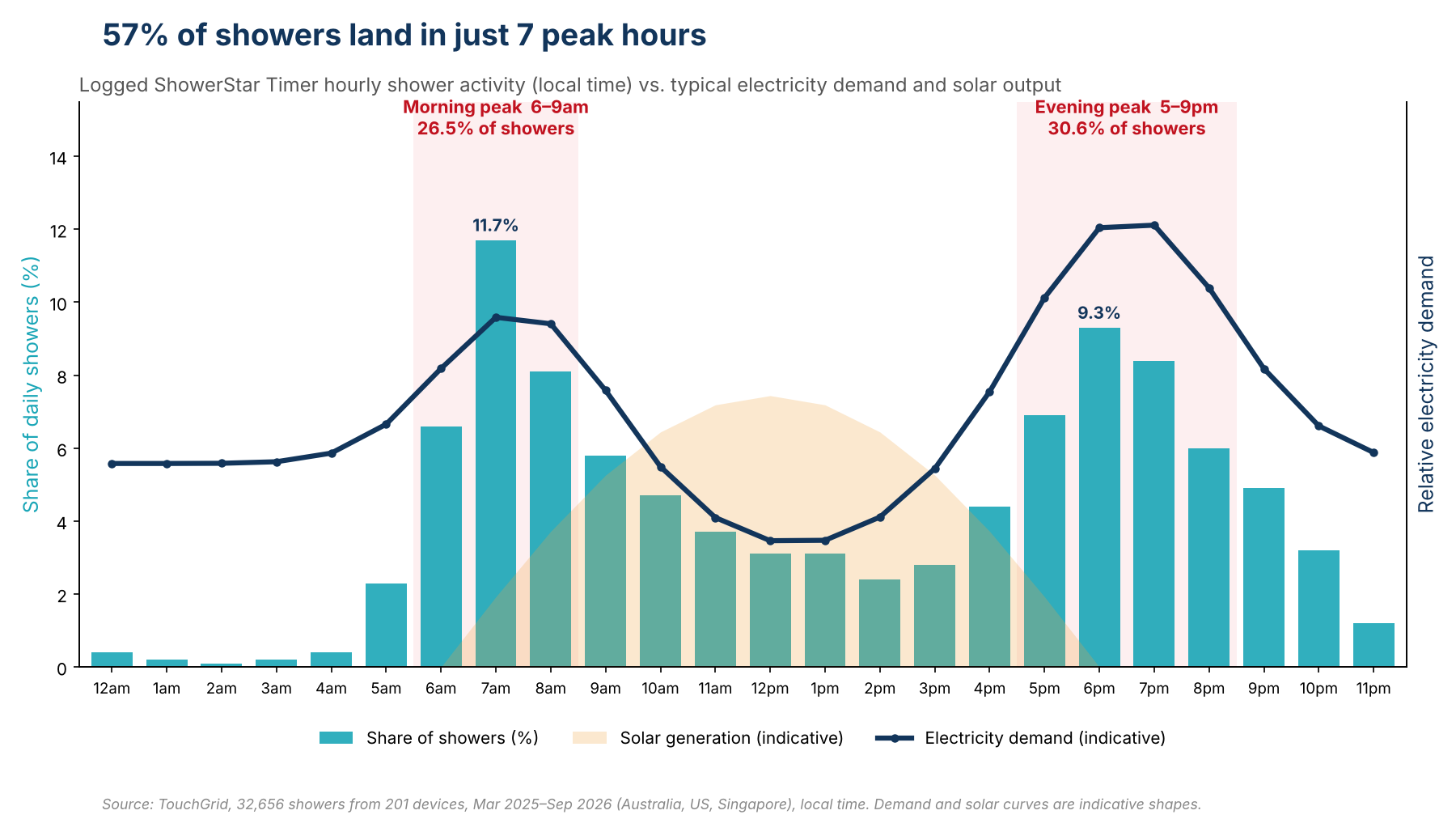
TouchGrid data from more than 32,000 showers, recorded by logged shower timers, shows a clear pattern. 57% of all showers happen in just seven hours: the morning peak (6–9am) and the evening peak (5–9pm). The busiest single hour is 7am, with nearly 12% of the day's showers.
In solar-rich markets like Australia, that timing matters. Solar has barely started in the morning and has dropped away by evening.
Electric storage water heaters can do most of their heating in the middle of the day on solar, or overnight on off-peak tariffs. The problem is the reheat. A long shower can drain the tank, and the heater switches on to replace that hot water straight away, right in the peak. Some water heaters are programmed to delay reheating until an off-peak window, but many have no such control installed.
Shorter showers draw less hot water, so reheat cycles during the peak are shorter or don't happen at all. For electric utilities, that makes shower behaviour more than an efficiency measure. It's a demand response resource hiding in plain sight, and it doesn't require customers to change when they shower, only how long.
How a utility deployment works


Everything a utility program needs to succeed
From first device installation to program-wide reporting, the ShowerStar Shower Sensor Timer & App gives utilities unprecedented visibility into conservation outcomes.
Real-Time Data Stream
Timestamped shower data uploads to the portal every time a user syncs the app.
Raw Data Export
Export the full dataset for use in your own analysis or billing platform.
Utility-Segmented View
Each utility sees only the devices assigned to their territory — no data overlap.
Program Evaluation
Prove persistent behaviour change with timestamped shower history over time.


Your complete data dashboard
The ShowerStar Shower Sensor TImer Portal gives you a real-time view of your entire device fleet — from a handful of units to tens of millions.
Families love it. The planet does too.

Kathy Harris

Allan Dalton

Audrey Canterbury

Brian Larkin
Start Saving
Smarter Today
Join the movement towards smarter, more sustainable living.

